Industry knowledge
What is modular construction?
Modular construction is not as simple as “making a house into a box”. It is a construction method that organizes design, parts, production, transportation, on-site installation and post-maintenance in advance, allowing the space to enter a productization path that can be quoted, produced, installed and tracked starting from a floor plan.
Summary
This article explains modular construction from four dimensions: industry definition, system classification, delivery process and project applicability. Compared with traditional on-site construction, the key to modular construction is not just factory prefabrication, but transforming construction and interior decoration into a more controllable product delivery system through early design freezing, module disassembly, supply chain collaboration and on-site installation planning.
Keywords: Modular construction; prefabricated interior; prefabricated building; DfMA; product delivery; full life cycle maintenance
Definition of modular construction
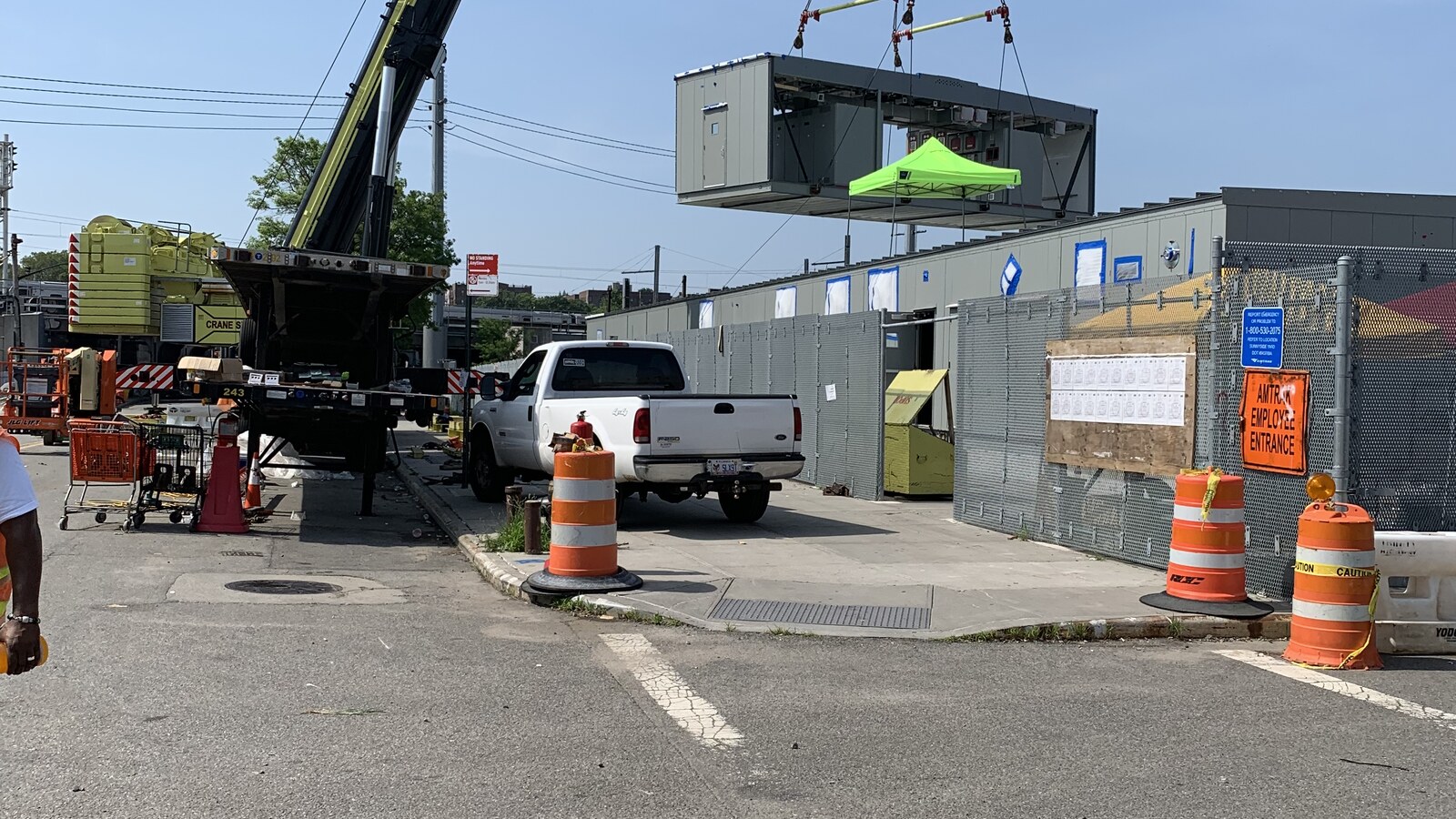
The global construction industry is re-understanding the concept of “construction”. More and more projects no longer rely solely on on-site manual work and temporary coordination, but transfer part of the work to factories, supply chains and digital pre-design. The Modular Building Institute of the United States describes modular construction as a method of producing building modules in a controlled factory environment and then transporting them to the site for assembly into a complete building; McKinsey also regards modular construction as an important path for the construction industry to move from "project system" to "productization".
For owners, developers and general contractors, the project value behind this is straightforward: lock the scope earlier, control the budget more clearly, reduce on-site rework, and get into use faster. For GODA, modular construction includes not only building modules, but also prefabricated interiors, modular furniture, kitchen and bathroom systems, material selection, quotation lists, installation tracking and post-maintenance.
First, modularity is the space unit. Houses, apartments, hotel rooms, offices, camp dormitories, conference cabins, bathrooms, kitchens and furniture systems can all be broken down into modules with rules of size, function, interface and material. Modules are not necessarily three-dimensional boxes, but may also be two-dimensional wall panels, floor systems, ceiling systems, cabinet product packages or electromechanical integrated units.
Second, modularization is the production method. Traditional construction leaves a lot of work to be done on-site, where materials, workers, weather, errors, cross-construction and quality inspections need to be dealt with simultaneously. In modular construction, processing, pre-assembly, trial assembly, quality inspection and packaging are moved to the factory as much as possible, and the on-site is more responsible for positioning, connection, hoisting, installation, closing and debugging.
Third, modular is the way of decision-making. Customers no longer compare every material and every node from scratch. Instead, they first make choices among product libraries, parameter tables, price ranges, manufacturer capabilities and application cases, and then proceed to in-depth design. In other words, modularization does not mean canceling the design, but allows the design to enter the implementable product logic earlier.
Modular construction is to dismantle complex spaces into product systems that are selectable, quotable, producible, installable and maintainable.
Its essential difference from traditional construction
Traditional construction is more like "on-site organization engineering": drawings, materials, types of work, construction schedules and site conditions constantly interact with each other, and many problems need to be solved during construction. Modular construction is more like "product delivery engineering": module size, transportation restrictions, hoisting paths, electromechanical interfaces, installation sequence, access openings, replacement methods and warranty boundaries must be considered during the planning stage.
This will bring about an important change: the early work will be more detailed and there will be less uncertainty in the later stage. For a mature modular project, you cannot wait until the site to decide how to close the walls, how to connect the kitchen water and electricity, how to waterproof the bathroom chassis, and how to avoid the pipelines of the cabinets. It needs to deal with key issues in the floor plan, BOM, BOQ, factory detailing and sample confirmation stages.
traditional construction
The on-site completion ratio is high and relies on worker experience and on-site coordination; it is flexible, but prone to rework, material substitution, budget additions, and construction schedule fluctuations.
Modular construction
The proportion of early stage deepening is high, and factory production and on-site preparation can be paralleled; stronger standardization, supply chain integration and installation planning are required.
Main types of modular construction
The industry often distinguishes between permanent modular buildings and removable modular buildings. The former is used for long-term residences, apartments, hotels, schools, medical and commercial buildings; the latter is commonly used in construction site camps, temporary offices, event spaces and movable facilities. In addition, there are different levels such as two-dimensional prefabricated components, prefabricated interiors, prefabricated electromechanical pipelines, integrated bathrooms, kitchen PODs, and furniture product packages.
It is important to understand these classifications because not all projects require a three-dimensional architectural box. A hotel project may be truly suitable for modularization in guest room furniture packages, bathroom systems and wall ceilings; an office may require more partitions, conference cabins, ceiling lamps, ground network systems and office furniture; an overseas camp may require an overall package of building modules, bathrooms, kitchens, furniture and maintenance spare parts.
Building modules
Modular houses, villas, apartments, campsites, and container spaces solve the problem of rapid construction, transportation, installation, and mass replication.
interior system
Floor, wall, ceiling, partition, bathroom and kitchen systems reduce wet work, cross construction and later demolition and modification.
Furniture and accessories
Wardrobes, cabinets, TV cabinets, office and hotel furniture, unified size, finish, hardware, packaging and installation logic.
Why does modular construction increase efficiency?
Efficiency comes from three places. The first is parallelism: the factory can produce modules, and the site can prepare foundations, pipelines, roads and hoisting at the same time. The second is duplication: Duplicate apartment types, duplicate rooms, duplicate cabinets and duplicate nodes can be standardized, from being solved once to being reused multiple times. The third is quality control: a factory environment makes it easier to control materials, processes, dimensions, testing and packaging.
But modularity is not a panacea. It requires earlier design freezes, more accurate dimensional control, clearer supply chain division of labor, and consideration of transportation, lifting, local codes, fire protection, structural, sound insulation, waterproofing and maintenance responsibilities. If not done well in the early stage, modularization will cause errors to be copied in batches. Therefore, professional modular capabilities are not just about "having a factory", but also having design deepening, product disassembly, supply chain integration, budget control and on-site installation management.
Modular construction does not mean low-end, temporary or cookie-cutter
Many people equate modularity with temporary construction, simple houses or standard boxes. This is just the impression left by the early market. For truly mature modular construction, what is standardized is the underlying logic, such as size systems, connection methods, material interfaces, packaging, transportation, and maintenance methods; what is customized is the spatial experience, such as facades, finishes, lighting, furniture combinations, material grades, and usage scenarios.
A good modular project should have two abilities at the same time: as stable as a product and as aesthetic as a space. It should not sacrifice the design effect, but should make the design easier to quote, produce and implement.
Workflow for a professional modular project
Confirm country/region, project type, area, budget, delivery time and drawing completeness.
Determine which parts are suitable for building modules, interior systems, furniture packages, bathroom kitchens or standard components.
Establish candidate solutions based on material, grade, application scenarios, price range and factory capabilities.
Translate materials, quantities, processing, packaging, logistics, installation and spare parts into a discussable budget path.
Complete prefabrication, preassembly, trial fitting, numbering, packaging and quality inspection at the factory.
On-site installation, debugging, recording problems in sequence, and establishing post-replacement and maintenance logic.
How does GODA understand modular construction?
GODA's approach is not to sell a module individually, but to organize the space as a product system. After the user uploads the floor plan, we will first determine which content in the project is suitable for standardization, which content needs to be customized, which products can be quickly integrated by the Chinese supply chain, and which nodes must be solved on site.
For example, an apartment project may require prefabricated wall systems, kitchen systems, bathroom systems, wardrobes and TV cabinets; an office project may require conference cabins, phone booths, partitions, office furniture and ceiling lights; an overseas camp may require building modules, bed cabinets, bathrooms, kitchens, spare parts and installation guidance to be planned together.
The real quotation is not simply a unit price per square meter, but a clear arrangement of the scope, materials, quantity, factory production, packaging logistics, installation methods and maintenance spare parts. What customers see should be an executable project path, not a string of isolated prices.
Video material: Use video to understand installation logic
Modular construction is best understood with videos, because the actions of hoisting, connection, on-site positioning, and bathroom POD installation are difficult to fully explain in words. The following YouTube entrances are suitable for extended learning; if YouTube cannot be opened directly in your area, you can copy the title search.
What do you need to prepare to start a modular project?
The most basic are floor plan, square footage, project location, project type and budget range. If you already have reference pictures, material preferences, target users, delivery time and local specification requirements, you can also submit them together. The more complete the information, the easier it is for GODA to determine the scope suitable for modularization.
If you do not have complete construction drawings yet, you can also start from the concept stage. One of the advantages of modular construction is that it can help owners turn their ideas into product scope and budget logic at an early stage, instead of waiting until the entire design is completed to discover that the cost or construction schedule is uncontrollable.
Is modular construction necessarily cheaper?
uncertain. The advantage of modularity is not simply to pursue the lowest unit price, but to reduce rework, shorten on-site time, improve quality stability, and make budgets more transparent. For projects that are highly repetitive, have tight schedules, or require long-term maintenance, the overall cost is usually more advantageous.
Will modular construction affect the design effect?
A good modular solution will not reduce the design effect. It will standardize the structure, dimensions, interfaces and installation logic, while retaining the customization of finishes, colours, furniture combinations and spatial experiences.
Are modularization only suitable for large projects?
Large-scale projects are more likely to amplify the value of modularity, but modular products can also be used in small offices, showrooms, B&Bs, single-family homes or partial renovations. The key is to find the parts that are suitable for productization.
References
- Modular Building Institute. What is Modular Construction?
- McKinsey & Company. Modular construction: From projects to products.
- Whole Building Design Guide. Modular Building.
- Autodesk. Prefabrication and Design for Manufacturing and Assembly.
Next Step
If you have a floor plan, you can first let GODA determine the scope of modularity that is appropriate.
Submit the project type, area, budget range and target delivery time and we will suggest suitable modular construction, interior systems, furniture packages and preliminary quotation paths.